Understanding the Different Types of Divorce Lawyers

Experienced Collaborative Divorce Lawyers for Fair and Strategic Property Division

Divide marital assets with fairness and foresight to protect your financial stability long after divorce.

How Property Division Works in New York

Dividing property in a New York divorce means more than splitting everything in half. New York requires equitable distribution of marital assets—but equitable does not necessarily mean equal. With our guidance, you’ll gain clarity around your rights, what qualifies as marital property, and how to negotiate a sustainable agreement that protects your future.

  • Understand what’s considered marital property
  • Identify and value complex assets
  • Navigate debt division with confidence
  • Divide assets and debts most equitably based on your circumstances
How_to_Approach_Property_Division_During_Mediation square

Key Considerations When Dividing Property in a New York Divorce

Property division can feel overwhelming, especially when emotions run high or financial lives are deeply intertwined. We help you distinguish between marital and separate property and ensure that each asset or debt is carefully evaluated for its current and long-term impact.

  • Marital vs. separate property distinctions
  • Emotional and financial implications
  • Tax and liquidity consequences

Why Handle Property Division Outside of Court?

Keeping property division out of court empowers you to make informed, value-driven decisions about your financial future rather than leaving it in the hands of a judge.

Courts follow strict formulas. We help you design creative, flexible agreements that reflect your actual needs, goals, and values.

Out-of-court divorce processes keep your financial details out of the public record and your future in your own hands.

We work with trusted collaborative financial professionals to assess the value of businesses, investments, retirement accounts, and other assets while ensuring those assets are divided in a way that considers all tax and other implications that could arise.

Non-adversarial divorce processes reduce tension and delays, helping you move forward with clarity and peace of mind. We want to help you avoid endless court dates and experts battling over the value of your assets and how best to distribute them.

8I5A6590reduced
Divorce Financial Checklist
Divorcing with Substantial Assets Consider a Collaborative Approach
8I5A6284reduced
Take the First Step Toward a Better Divorce

Clarity and Control Over Your Financial Future Starts Here

Let’s navigate your divorce with compassion and clarity—without unnecessary conflict.

More Ways We Support Families

Whether you’re thinking about divorce, in the midst of it, or navigating life after, we offer a range of legal services tailored to your needs—from strategic pre-divorce planning to parenting agreement customization and post-divorce modifications.

Non-Adversarial Divorce Solutions

Our approach focuses on minimizing conflict and preserving relationships. We offer divorce options designed to protect your well-being while guiding you toward clear, respectful resolutions.

More Services

Child Custody & Parenting Plans

Co-parenting solutions that support your children and minimize conflict.

Explore More

Child Support

Ensure your children’s financial needs are met fairly and clearly.

Explore More

Spousal Support

Determine fair and sustainable financial arrangements that reflect both short- and long-term needs.

Explore More

Pre-Divorce Legal Guidance

Get clarity and direction before making decisions or taking action.

Explore More
DWC
free ebook

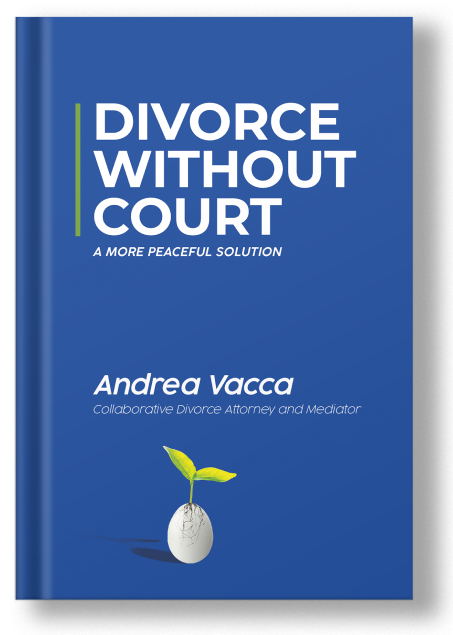
Divorce Without Court:
A More Peaceful Solution

Learn how to keep your divorce out of court with clear, compassionate strategies. This guide covers collaborative divorce, divorce mediation, the benefits of each process, and your first steps toward a peaceful resolution.

Get my Free eBook

"*" indicates required fields

This field is for validation purposes and should be left unchanged.
Name*
Please do not include any confidential or sensitive information in this form Submitting this form does not create an attorney-client relationship.

Property Division FAQs

New York law is based on equitable distribution. That means property and debt acquired during the marriage are divided fairly and equitably, but not always 50/50. Courts consider factors such as the length of marriage, financial contributions, income, health, and needs of each spouse.

Marital property includes most assets and debts acquired during the marriage—homes, retirement accounts, businesses, investments, mortgages, and credit card debt. Assets owned before the marriage or received through inheritance or gifts are usually considered to be separate property.

You’re typically responsible for debts incurred during the marriage if they were incurred for marital or family purposes. Pre-marital debts or secretly incurred debts are generally not considered joint responsibility. Keeping your divorce out of court allows you the flexibility to make your own decisions around marital and pre-marital debt.

We bring in neutral financial professionals to appraise and analyze complex assets—such as businesses, stock awards, digital assets, certain real estate, intellectual property, retirement assets and more. Having a trusted financial professional as part of your divorce team will allow you and your spouse to make informed trade-offs and protect the long-term value of your assets.

Yes. Through collaborative divorce, negotiation, or mediation, you and your spouse can reach a legally binding property settlement without court involvement—saving time, stress, and money, and allowing you to customize an agreement that works for both of you.